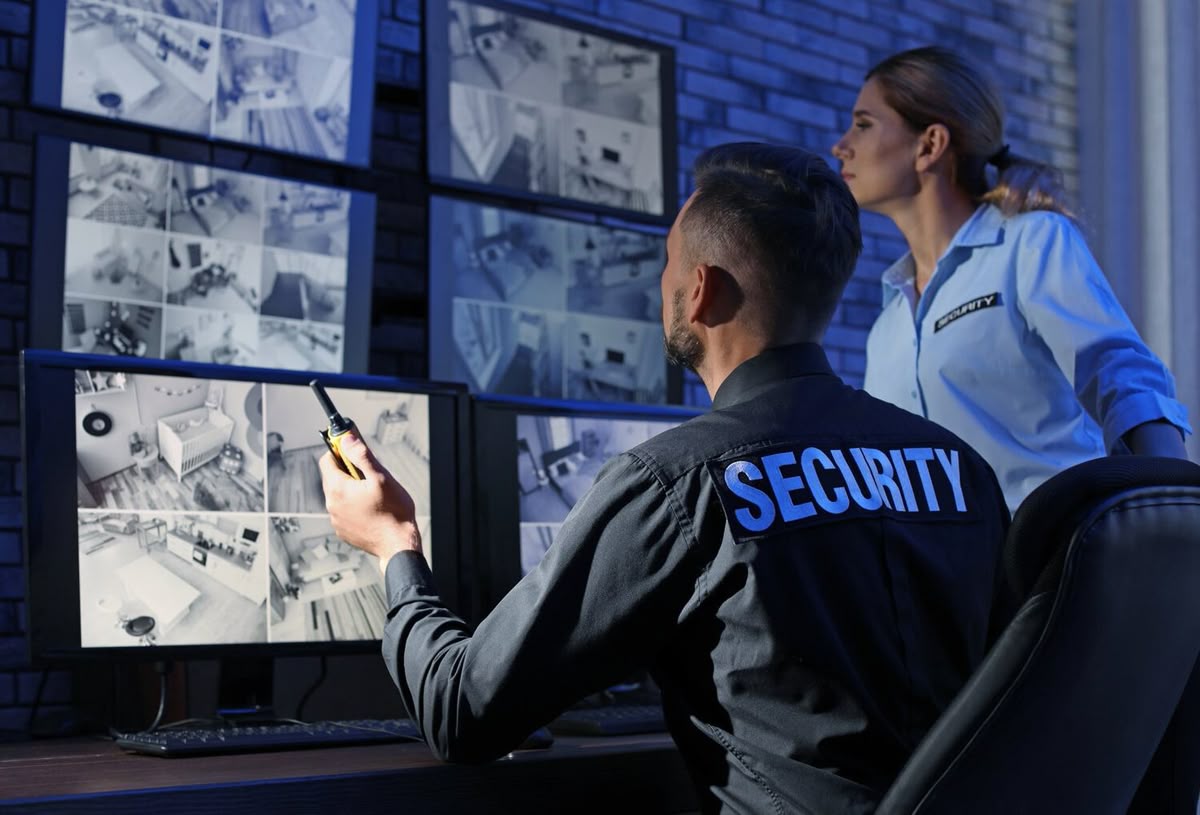
In the past decade, CCTV has become the go-to security measure for most businesses. It is visible, familiar, and gives the sense that someone is always watching. When companies install a network of cameras, the belief is that crime simply won’t happen anymore. If something looks protected, surely intruders will stay away.
That belief sounds logical, but the reality is very different. A camera can observe. It can record. It can do those tasks every minute of every day. But a camera cannot step in, speak up, or stop a situation from getting worse. Criminals today understand this better than most business owners. Recording devices don’t frighten them. In many cases, intruders behave as if the cameras aren’t even there.
The truth is simple: CCTV is a strong starting point. It gives visibility, evidence, and early warnings. But on its own, it does not prevent crime. CCTV only becomes a real force for safety when trained security officers respond to what the cameras detect.
Table of Contents
CCTV Alone Cannot Prevent Crime Without Trained Birmingham Security Officers
CCTV Detects Crime, but Only Officers Can Intervene
Picture a warehouse at night. A camera spots movement near a delivery bay. The lens captures every second as two intruders pull at the metal shutter. It’s all stored on a hard drive, maybe even watched live by someone. But unless a trained officer steps in, the footage changes nothing.
A camera cannot yell, “Stop.” It cannot step forward. And it cannot block entry. Observation without action allows harm to continue. Evidence becomes a record of failure instead of a tool for protection.
This is the fundamental gap that CCTV alone cannot bridge: the lack of intervention.
Criminals Exploit Blind Spots, Delayed Responses, and Predictable Camera Coverage
Criminals do not operate randomly. They study patterns. They walk the perimeter, identify where cameras point, and time their attempts when they think no one is watching. Blind spots are an invitation. Delayed responses are an opportunity.
Industrial estates, logistics hubs, car yards, and commercial storage sites are especially vulnerable. They contain high-value goods in large spaces, making full camera coverage difficult. When a thief knows there will be no immediate confrontation, they become bold. They cut fencing, force gates, and lift tools into vehicles without hesitation.
A camera might record them perfectly. But unless someone arrives or warns them in real time, nothing stops the theft.
Real-Time Human Judgment Is Critical When a Threat Escalates
A security officer doesn’t just see an intruder. They judge the situation. They read posture, movement, aggression, and intention. They notice whether an individual is alone, carrying tools, scouting the area, or acting under pressure.
Technology cannot make that judgment. A camera can alert to movement, but not motive. A human can decide whether the situation calls for a calm intervention or a rapid escalation. The difference between “a trespasser” and “a criminal preparing to break in” is subtle, and trained officers recognise it instantly.
Security is not just about spotting crime. It is about understanding behaviour as it unfolds.
Verbal Warnings and Physical Presence Prevent Crime Before Damage Occurs
When criminals hear a live warning through an audio speaker or see an officer arrive on site, the situation changes fast. It interrupts their confidence. It breaks their plan. Most offenders retreat before damage occurs.
A recording never frightens anyone. A person does. The presence of trained security communicates risk to the offender. Confrontation, arrest, and failure become possibilities. Crime prevention begins the moment criminals realise someone is willing to act, not watch.
Coordinating with Police and Emergency Services Reduces Loss and Liability
When a break-in escalates, timing becomes everything. Officers report incidents with clear detail: the number of offenders, the level of aggression, the direction of movement, and the assets at risk. Police and rescue teams respond faster when they receive accurate, time-sensitive information.
This level of escalation cannot come from CCTV alone. A camera cannot brief first responders. A camera cannot secure the gates while officers arrive. A camera cannot ensure staff remain safe while a threat unfolds.
Every part of the response chain depends on human action. CCTV sees. Officers protect.
Why Businesses Choose CCTV Security Solutions Birmingham
Businesses across the region are adopting integrated systems because CCTV security solutions Birmingham deliver both visibility and intervention. The combination of cameras and trained personnel has become the standard for commercial estates, construction sites, corporate headquarters, retail parks, and logistics facilities.
An intruder cannot rely on luck when they know officers can deploy at any moment. A large site doesn’t feel vulnerable when someone is actively watching and prepared to respond. Insurance providers recognise the reduction in risk, and companies see measurable changes, fewer losses, fewer attempts, and fewer disruptions.
Hybrid Security Delivers Continuous Visibility and Immediate Response
The system does not sleep. Cameras capture every movement, and trained officers react when something is wrong. One keeps watch; the other takes control. That partnership is what protects property.
Cost Benefits Without Compromising Safety Standards
Businesses gain the advantages of 24-hour presence without stationing large teams on-site. It’s a smart balance of efficiency without sacrificing safety.
The Business Impact of Integrating CCTV with Trained Security Staff
When comparing CCTV-only setups with CCTV supported by officers, the differences are striking. The first approach records crime. The second prevents it. Businesses using integrated protection report not only fewer incidents, but shorter disruptions, safer staff, and stronger operational confidence.
Beyond financial loss, crime impacts reputation and continuity. For companies storing goods for clients, the stakes can be even higher. A single unchecked intrusion does more than damage property; it damages trust. Integrating technology with trained personnel ensures that threats are stopped before they turn into business problems.
Conclusion
CCTV plays a vital part in protecting businesses today. It gives visibility at every hour, and it never gets tired. But it is still only half of what real security looks like. Cameras can alert us to danger, yet they cannot step in to stop it. Crime prevention needs more than evidence after the fact; it needs someone who is ready to act the moment a threat appears.
When trained security officers work alongside CCTV, the picture changes completely. The system doesn’t just watch. It reacts. Officers read intent, issue warnings, confront intruders, and call for emergency support when needed. That ability to intervene is what keeps property, assets, and people safe. Businesses that rely on cameras alone end up recording the damage they hoped to avoid. Businesses that combine trained officers with technology stop the damage from happening in the first place.
Every company wants to protect what it has worked hard to build. Security should support that goal, not leave gaps that criminals can exploit. When cameras and trained officers work together, crime has far less room to succeed. That partnership delivers something CCTV alone never can provide: peace of mind that someone is not only watching your site, but ready to defend it.
True security isn’t just seeing danger. It is responding to it. And that is why action will always win over observation.
Frequently Asked Questions
Can CCTV alone stop a break-in or theft attempt?
No. CCTV can record a crime, but without intervention, the damage still occurs.
Why is human intervention essential even with advanced CCTV technology?
Only trained officers can stop escalation, confront intruders, and coordinate emergency responses.
Do trained Birmingham security officers make CCTV systems more effective?
Yes. They turn detection into prevention through real-time action.
Are businesses with CCTV-only setups at higher risk?
Typically, yes, because intruders know there is no immediate confrontation.What makes CCTV security solutions Birmingham suitable for industrial and commercial sites?
They combine constant visibility with rapid physical response, which is ideal for high-value and high-risk locations.